

Dragonfly Medicine Meaning and Healing Power for Transformation and Growth

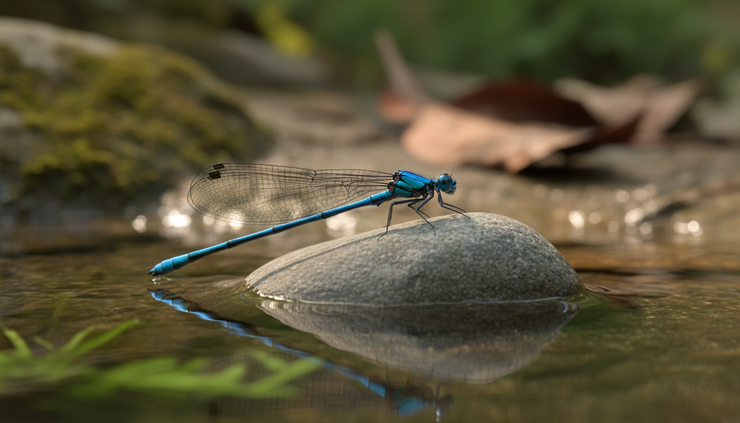
A dragonfly can spend much of its life underwater, then rise into the air with a body built for speed, balance, and light. That change is part of what makes the dragonfly such a powerful symbol. It does not simply grow. It changes elements.
For many people, dragonflies feel like messengers. They appear near water, flash with color, hover in place, and vanish before the mind can fully catch up. Across cultures, they have been linked with transformation, clarity, renewal, illusion, courage, and the ability to move through change with grace.
The idea of Dragonfly Medicine draws on those meanings. It is not medicine in the clinical sense, and it should not replace medical or mental health care. Here, “medicine” means a spiritual teaching, reflective symbol, or healing presence that helps a person understand life in a new way.
At its heart, dragonfly medicine asks a simple question: What is ready to change, and how can that change happen with more awareness?

Dragonflies have long carried spiritual meaning
Dragonflies live close to water, and water has deep symbolic weight in many traditions. It can represent emotion, memory, intuition, cleansing, and the unseen parts of life. Because dragonflies begin life in water before taking flight, they naturally become symbols of moving from one state of being to another.
That shape-shifting life cycle gives the dragonfly its core meaning. It reminds people that growth does not always look like steady progress. Sometimes growth looks like shedding an old form.
The dragonfly also moves in unusual ways. It can hover, fly backward, turn quickly, and change direction with ease. As a symbol, this makes it a guide for adaptability. It suggests that healing does not always come from pushing forward. Sometimes it comes from pausing, sensing the air, and choosing a new direction.
Several symbolic themes appear again and again:
Transformation The dragonfly’s life cycle mirrors deep personal change.
Adaptability Its flight reflects the skill of responding to life without losing balance.
Lightness Its wings seem delicate, yet they carry it with precision.
Clarity Its connection to water and light points to seeing through confusion.
Presence A dragonfly appears briefly, which can make the moment feel more alive.
These meanings are not tied to one belief system alone. They arise from close observation of the natural world. People watched the dragonfly and saw a living image of change.
The cultural significance of dragonfly medicine
The dragonfly’s symbolism varies across cultures. In some places it is a sign of good luck. In others it carries warnings about illusion or vanity. This variety matters because it keeps the symbol from becoming flat or overly simple.
Native American and Indigenous perspectives
Many Native American traditions honor animals, birds, insects, and natural forces as teachers. Specific meanings differ widely among nations, so it is best not to treat “Native American symbolism” as one single belief system.
In some Indigenous stories and teachings, dragonflies are associated with renewal, swiftness, water, and transformation. Their presence near ponds, rivers, and wetlands links them to emotional life and the movement between visible and invisible worlds. In some Pueblo traditions, dragonflies have been connected with water and fertility in artistic forms.
For people outside these traditions, respectful engagement matters. Dragonfly medicine can be approached as a personal nature-based reflection without claiming ownership of ceremonies or sacred teachings that belong to specific communities.
Japanese symbolism
In Japan, the dragonfly has long been seen as a symbol of courage, victory, and perseverance. Samurai culture admired the dragonfly because it moves forward with sharp focus. Historically, Japan was sometimes poetically associated with dragonflies due to the insect’s abundance and its place in art, poetry, and seasonal imagery.
The Japanese view adds strength to the softer meanings of dragonfly symbolism. Transformation is not only emotional. It can also require discipline, timing, and bravery.
Chinese and broader East Asian meanings
In Chinese symbolism, dragonflies are often linked with harmony, prosperity, summer, and good fortune. Their light movement and shining wings can suggest joy and grace. They also carry associations with change, especially the kind that feels natural rather than forced.
This perspective highlights a healing lesson: change does not always need to feel heavy. Some growth arrives with beauty, ease, and play.
European folklore
In parts of European folklore, dragonflies carried more mixed meanings. Their unusual bodies and darting flight made them mysterious. Some folk names gave them an eerie quality, and they were sometimes tied to illusion or trickery.
Even these shadowed meanings have value. The dragonfly’s connection to illusion can invite self-honesty. What looks solid may not be solid. What feels permanent may be temporary. What seems frightening may simply be unfamiliar.
The healing power of transformation and adaptability
Dragonfly medicine speaks most clearly during times of transition. A move, a loss, a new role, a health challenge, a spiritual awakening, or the end of a long pattern can all feel like standing between worlds.
The dragonfly teaches that in-between places are not empty. They are active. A nymph beneath the water may not look like the winged adult it will become, but change is already happening.
This is where the symbol becomes especially useful for Growing and Healing. It gives the mind a concrete image for something hard to explain: becoming someone new while still carrying the memory of who you were.
Transformation rarely happens all at once
The dragonfly does not begin with wings. It begins in water. Its early life is hidden from easy view, shaped by patience and instinct. This can mirror emotional healing. Much of the real work happens before other people can see a result.
A person may be changing when they are:
Resting more honestly
Ending habits that once felt protective
Speaking with more clarity
Letting old identities soften
Making room for grief without rushing it
Choosing peace over familiar conflict
These shifts can look small from the outside. Inside, they may mark a major turning point.
Adaptability is not the same as abandoning yourself
The dragonfly’s quick movements can be misunderstood as restlessness. Yet its flight is highly controlled. It adapts without becoming lost.
That distinction matters in personal healing. Adaptability does not mean saying yes to everything or reshaping yourself to please others. It means staying connected to your center while responding to reality as it changes.
A simple dragonfly-inspired question can help:
Where can I become more flexible without betraying what is true for me?
This question is especially useful during conflict, career change, family stress, and inner growth. It encourages movement, but not self-abandonment.
Lightness can be a healing practice
Dragonflies look almost weightless. This does not mean they are weak. Their lightness is functional. It helps them move with speed and precision.
In human terms, lightness can mean releasing what no longer needs to be carried. Resentment, shame, perfectionism, and old fear can become heavy over time. Dragonfly symbolism invites a different posture.
Lightness may look like:
Letting an old story end
Laughing again after a hard season
Creating space before reacting
Choosing beauty without guilt
Accepting that change can hold both sadness and relief
Healing is not always serious in tone. Sometimes the return of lightness is a sign that life is flowing again.
How dragonfly medicine fits into modern wellness
Modern wellness often blends practical care with symbolic meaning. A symbol like the dragonfly can support mindfulness, journaling, meditation, nature connection, and emotional reflection. It gives the nervous system something gentle to focus on while the mind explores change.
This does not make the dragonfly a cure. It makes it a mirror.
Mindfulness with a dragonfly focus
A dragonfly-inspired mindfulness practice can be simple. Sit near water if possible, or imagine a pond in the mind. Notice what feels still, what feels hidden, and what is ready to move.
Try this short practice:
Sit comfortably and take a few slow breaths.
Picture a dragonfly hovering above calm water.
Notice the water beneath it as your emotional life.
Notice the air around it as possibility.
Ask yourself what needs movement, clarity, or release.
End by naming one small step you can take today.
This type of visualization can help turn vague stress into a clearer inner conversation.
Journaling for transformation
Dragonfly symbolism works well with journaling because it holds several themes at once. It can help reveal where life is asking for change.
Useful prompts include:
What part of my life feels like it is still underwater?
Where am I being asked to adapt?
What old identity no longer fits?
What would lightness feel like this week?
What truth am I finally ready to see clearly?
The goal is not to force a dramatic realization. The goal is to listen long enough for honest answers to surface.
Nature connection as a healing practice
Watching dragonflies in nature can become a quiet form of restoration. Wetlands, lakes, streams, and garden ponds often create the right habitat. The practice is less about finding a “sign” and more about paying attention.
Nature-based reflection offers a break from constant analysis. The dragonfly does not explain transformation. It embodies it.
A short outdoor practice might include:
Walk slowly near water.
Notice color, movement, sound, and light.
Watch without trying to name every species.
Let the dragonfly’s movement guide your breathing.
Reflect on one area where life is asking you to respond differently.
Time in nature can support calm, attention, and emotional balance. For mental or physical health concerns, it works best as a complement to appropriate care.

Dragonfly medicine can guide personal growth
The most useful symbols are the ones that change the way a person sees daily life. Dragonfly medicine encourages growth that is flexible, honest, and connected to the present moment.
It can be applied in ordinary situations:
Life moment | Dragonfly teaching | Practical reflection |
Feeling stuck | Change may be happening below the surface | What small shift is already underway? |
Facing uncertainty | Adapt without losing your center | What can I adjust while staying true to myself? |
Letting go | Lightness can return after release | What am I carrying that no longer belongs to me? |
Seeking clarity | Water and light reveal what was hidden | What truth have I avoided naming? |
Starting over | Transformation can lead to new freedom | What form of life is asking to emerge? |
The dragonfly also reminds us that beauty and survival can exist together. Its fragile-looking wings are strong enough for precise flight. In the same way, sensitivity does not cancel resilience. A tender person can still be steady. A changing person can still be whole.
A simple ritual for reflection
A ritual does not need to be complex to be meaningful. The following practice can be done at home, near water, or during a quiet morning.
Gather a journal, a glass of water, and a small object that reminds you of change, such as a stone, feather, or drawing of a dragonfly.
Then move through these steps:
Place the water in front of you.
Take three slow breaths.
Write one thing you are ready to release.
Write one quality you want to develop.
Touch the object and say a simple phrase, such as, “I allow change to teach me.”
Pour the water into a plant, garden, or sink with gratitude.
The power of this practice comes from attention. It gives the inner life a clear shape, even for a few minutes.

The takeaway from dragonfly medicine
Dragonflies teach through contrast. Water and air. Stillness and speed. Fragility and strength. Hidden growth and sudden flight.
Their medicine is the reminder that transformation does not require rejecting the past. It asks for movement with awareness. It asks for clearer seeing. It asks for the courage to become more flexible while staying rooted in truth.
When a dragonfly appears, whether in nature, a dream, art, or memory, it can serve as a quiet invitation. Pause. Look again. Notice what is changing. Then take one honest step toward the life that is ready to unfold.


Comments